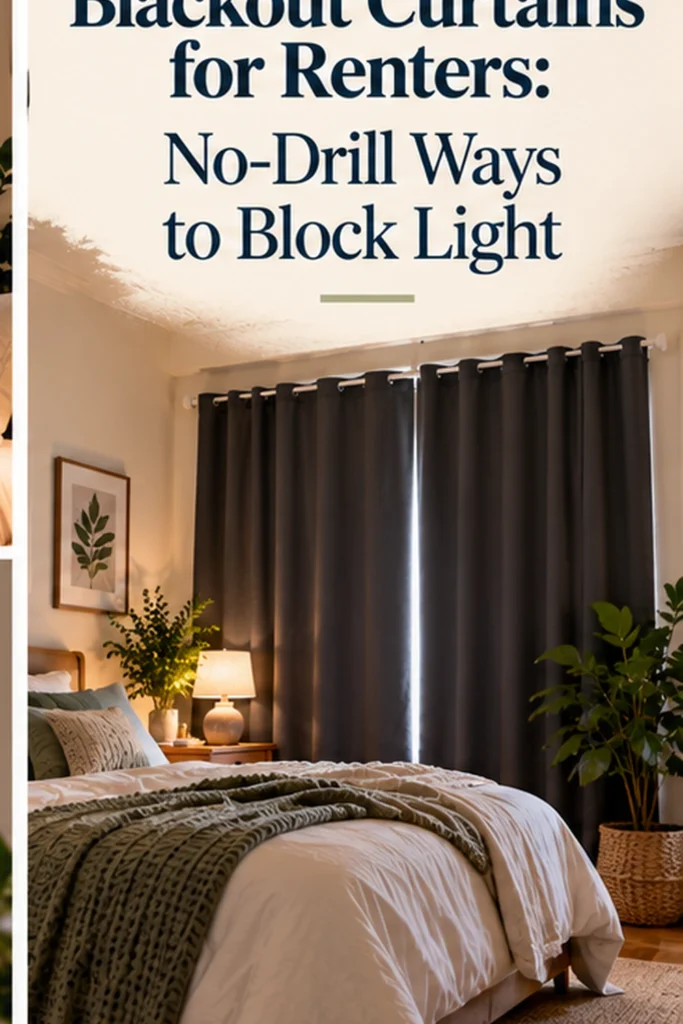

Renters can block a surprising amount of bedroom light without drilling into walls or window trim. The most practical options are a strong tension rod with lightweight blackout curtains, removable curtain-rod brackets, temporary blackout panels or shades, and layered solutions that cover the bright gaps the first layer leaves behind.
The key is to choose the method for your window—not simply the product with the word blackout on the package. A no-drill setup that leaves a bright strip above the curtain or several inches uncovered at each side can still feel disappointingly bright.
This guide focuses on renter-friendly ways to darken a bedroom while minimizing permanent changes. Always check your lease and the instructions for the specific mounting product before installation.
1. Start With the Real Renter Problem: Darkness Without Damage
For a homeowner, the straightforward answer may be to screw a wide curtain rod into studs or trim and hang heavy lined drapes. Renters often have a different set of constraints: no holes, no damaged paint, no adhesive residue, limited storage, unusual window frames, and a security deposit they want back.
That changes the decision. The best renter setup is not necessarily the heaviest curtain. It is the light-blocking system that fits securely, can be removed cleanly, and covers the window far enough beyond the glass to reduce leakage.
A dark sleep environment is not merely an aesthetic preference. NHLBI recommends keeping the bedroom quiet, cool, and dark, while CDC/NIOSH guidance specifically recommends opaque window coverings and addressing light entering around the edges. These recommendations support the goal of reducing unwanted bedroom light; they do not mean every renter needs blackout curtains.
2. Option One: Tension Rod + Lightweight Blackout Curtains
A tension rod is often the first no-drill option renters consider because it presses against the inside of the window recess instead of using screws. It can work very well when the window has a deep, sturdy, parallel recess and the curtain is not excessively heavy.
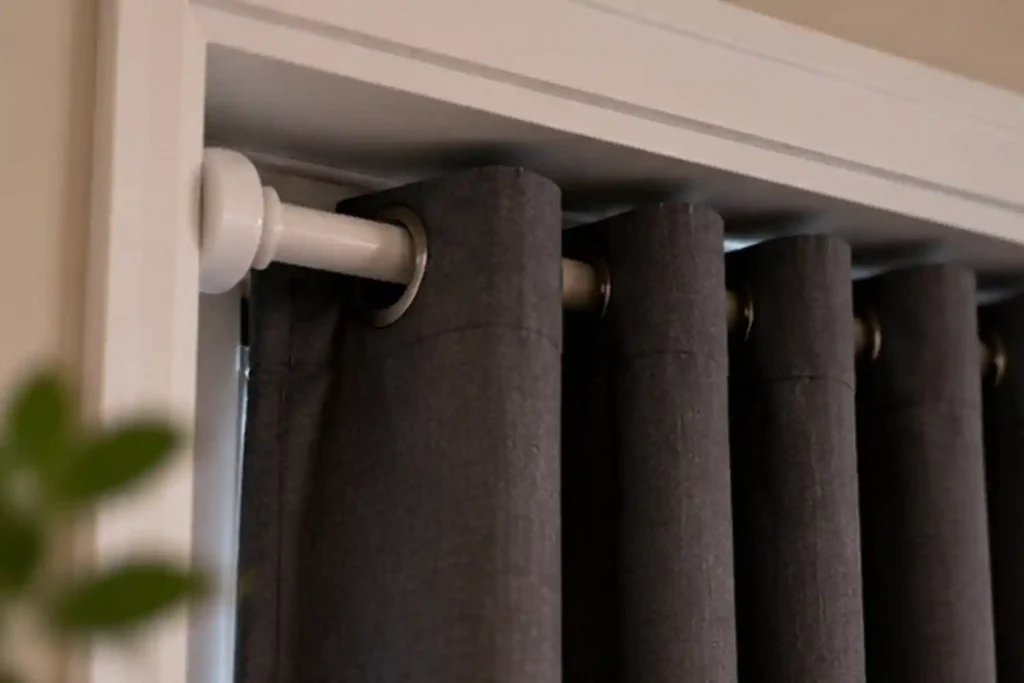
The tradeoff is coverage. Because the rod normally sits inside the recess, the curtain may not extend far enough beyond the sides of the window. That can leave vertical light gaps. The top can also leak light depending on how the curtain hangs.
2.1 When a tension rod works best
The window recess has two firm, parallel side surfaces.
The curtain panels are within the rod manufacturer’s weight and width limits.
You need a fully removable solution.
A small amount of side leakage is acceptable or can be handled with a second removable layer.
2.2 When to skip it
Skip a tension rod if the surfaces are weak, uneven, freshly painted, or too shallow to hold the rod securely. Also avoid improvising with an overloaded rod above a bed or anywhere a falling rod could injure someone.
3. Option Two: Removable No-Drill Curtain-Rod Brackets
Some removable mounting systems use adhesive strips, hooks, clamps, or brackets to hold a curtain rod without conventional drilling. These can allow the rod to sit outside the window frame, which is useful because wider coverage usually blocks side light better than an inside-mounted curtain.
The limitation is that ‘no drill’ does not automatically mean ‘no damage.’ Adhesive performance depends on the wall surface, paint condition, humidity, preparation, load, and removal method. Follow the mounting-system instructions exactly and do not exceed its rated load.
If your lease prohibits adhesives as well as holes, this option may not be appropriate even if the product is marketed to renters.
4. Option Three: Temporary Blackout Panels or Removable Shades
If your priority is darkness rather than the look of traditional curtains, a removable opaque panel or temporary blackout shade can be more efficient. Instead of hanging fabric several inches away from the glass, these systems sit close to the window and can reduce the amount of daylight that enters through the opening.
This approach is particularly useful for shift workers, nurseries, travel, short leases, or bedrooms where a tension rod cannot fit. CDC/NIOSH notes that blinds may allow too much light to filter into a bedroom and recommends more opaque window coverings when strong light is a problem.
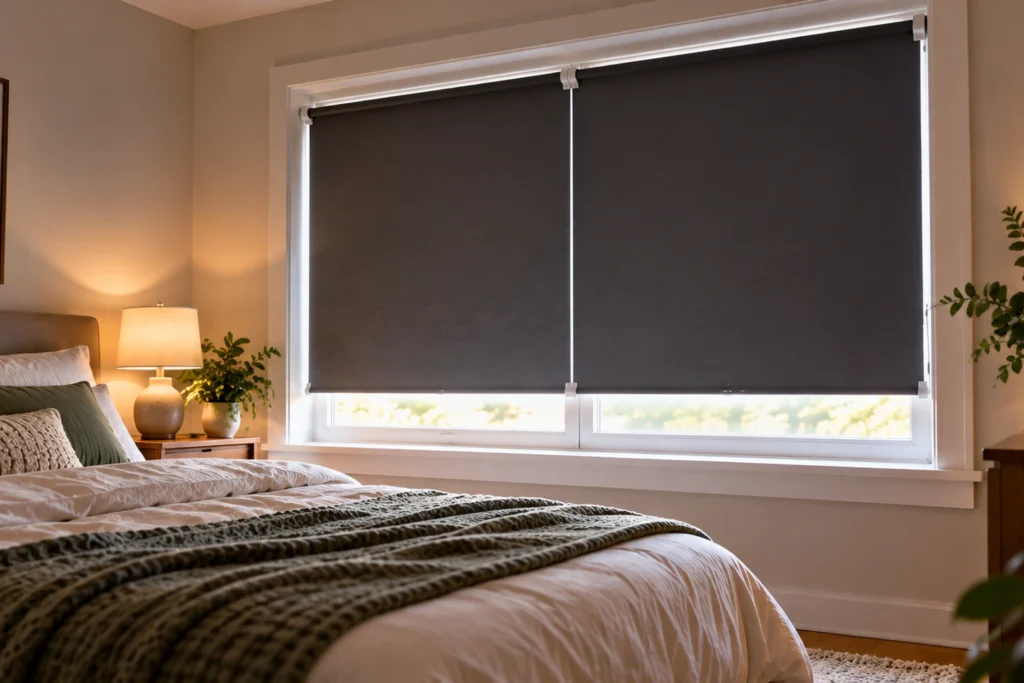
Look for a temporary system designed for repeated removal if you need daylight during waking hours. A panel that is difficult to remove may technically darken the room but become annoying in daily use.
5. Option Four: Use the Existing Blinds as the First Layer
Many rentals already have blinds. They are useful for privacy, but they often leave gaps between slats or around the perimeter. Rather than removing them, treat them as the first layer and add a renter-friendly opaque layer over or around them.
For example, existing blinds can remain in place while a tension-mounted curtain or removable blackout panel handles the light that passes through. This reduces unnecessary alterations and makes move-out simpler.
6. The Biggest Mistake: Ignoring Light Around the Edges
A curtain can be genuinely opaque and still produce a bright room if sunlight enters above, beside, below, or between the panels. This is especially obvious when the bedroom faces sunrise, a bright courtyard, parking-lot lighting, or a streetlamp.
CDC/NIOSH explicitly recommends making adjustments to block light entering around the edges. For renters, that usually means prioritizing coverage rather than permanently fastening the curtain to the wall.
- Choose panels wider than the visible glass so they overlap generously.
- If possible, position the no-drill rod or bracket system beyond the window edges.
- Overlap two curtain panels at the center rather than allowing a narrow seam.
- Use a second removable opaque layer where a stubborn gap remains.
- Test the setup during the brightest part of the day before deciding it is finished.
Read more: How to Block Light Around the Edges of Blackout Curtains
7. Renter-Friendly Solutions by Window Problem
| Problem | No-drill approach | Main advantage | Watch for |
| Deep recessed window | Tension rod + lightweight blackout curtains | Simple and fully removable | Side/top light gaps |
| Shallow window | Removable outside-mount brackets | Can provide wider coverage | Wall/paint compatibility |
| Very bright daytime window | Temporary opaque blackout panel/shade | Strong light blocking close to glass | Daily removal and heat considerations |
| Rental with existing blinds | Keep blinds + add removable opaque layer | Minimal alteration | Do not overload existing hardware |
| Short-term rental/travel | Portable blackout shade or panel | Easy to move and store | Fit and attachment method |
8. What About Adhesive Blackout Film?
Opaque removable window films can reduce light without curtains, but they deserve more caution than many quick DIY guides suggest. Window glass varies, and some materials can affect heat buildup or may not be appropriate for certain insulated, coated, laminated, or specialty windows.
If you are considering film, check both the film manufacturer’s compatibility guidance and any instructions from the property manager or window manufacturer. Do not assume that a product labeled removable is automatically safe for every window or guaranteed to leave no residue.
9. What About Foil, Cardboard, or DIY Window Covers?
A temporary opaque board can be useful in some situations, but avoid turning a sleep problem into a window, moisture, or safety problem. Do not block required ventilation or emergency egress, and be cautious with materials that can trap heat against glass.
For a long-term bedroom setup, a purpose-made removable shade, panel, or properly supported curtain usually gives a cleaner and more predictable result than taping household materials directly to the window.
10. How to Choose the Right No-Drill Setup
- Use the following sequence instead of buying the first renter-friendly product you see.
- Measure the full window recess and the surrounding area—not only the glass.
- Identify where the brightest light actually enters.
- Check whether the frame can support a tension rod.
- Read your lease for rules about holes, adhesives, trim, and window coverings.
- Check the rated load and surface requirements of any mounting system.
- Choose coverage before decoration: a wider opaque layer usually matters more than a perfect fabric color.
- Install the system and inspect it in full daylight.
- Only add a second layer if the first leaves a meaningful light leak.
This prevents a common pattern: buying increasingly heavy curtains when the real problem is a two-inch gap beside the window.
11. Best Approach for Daytime Sleep in a Rental
Daytime sleepers have the hardest version of this problem because sunlight is much brighter than typical nighttime outdoor light. NHLBI specifically recommends removing sound and light distractions during daytime sleep for shift workers, including the use of light-blocking curtains as an example.
In a rental, a practical setup might combine a removable opaque window layer with a comfortable eye mask. If light also enters under the bedroom door, a removable draft stopper can help. CDC/NIOSH recommends addressing doorway light as part of creating a dark sleep environment.
Read more: How to Darken a Bedroom for Daytime Sleep
12. When You Do Not Need Blackout Curtains at All
If your lease makes curtain mounting difficult, remember that the goal is darkness—not owning blackout curtains. A fitted removable shade or panel may block light more effectively than fabric, especially when the window is small or the recess is irregular.
Read more: Best Ways to Block Bedroom Light Without Blackout Curtains
13. Move-Out Checklist: Protect the Security Deposit
- Remove the curtain and rod without forcing the frame.
- Follow the adhesive manufacturer’s removal procedure instead of pulling strips abruptly.
- Check for residue, paint lifting, dents, or pressure marks.
- Clean only with products safe for the specific painted or finished surface.
- Return blinds and other landlord-provided window coverings to their original configuration.
- Keep any removed landlord hardware labeled and stored safely during the lease.
No-drill solutions reduce the need for permanent holes, but they do not eliminate responsibility for the surface. A careful installation and removal process matters as much as the product choice.
14. Frequently Asked Questions
14.1 Can renters hang blackout curtains without drilling?
Yes. Depending on the window and lease, options can include tension rods, removable mounting systems, or temporary blackout panels and shades. The best choice depends on the window recess, curtain weight, permitted attachment methods, and the amount of light leakage.
14.2 Will a tension rod hold blackout curtains?
It can hold some blackout curtains when the rod is correctly sized, the mounting surfaces are suitable, and the curtain weight stays within the manufacturer’s rating. Heavy lined curtains may be too much for some tension rods.
14.3 How do I block side light without drilling?
Start with wider coverage. A removable outside-mounted solution, overlapping panels, or a second removable opaque layer can reduce side gaps. Avoid attaching improvised materials in ways that damage paint or interfere with the window.
14.4 Are no-drill blackout curtains completely damage-free?
Not necessarily. Pressure-mounted rods can mark weak surfaces, and adhesive systems can affect some paint or finishes. Follow product instructions, lease requirements, and surface-preparation/removal guidance.
14.5 What is the best option for a renter who works night shifts?
The most useful setup is the one that creates reliable darkness during daytime sleep. A temporary opaque shade or panel plus edge control may outperform a loosely fitted curtain. An eye mask can serve as a backup when room changes are limited.
14.6 Should I cover the window completely?
For sleep, reducing unwanted light can be helpful, but do not obstruct a window that serves as required emergency egress or ventilation. Rental and building requirements vary, so preserve safe operation of the window.
15. Final Takeaway
Renters do not have to choose between a bright bedroom and drilling holes into the wall. A tension rod, removable bracket system, temporary opaque shade, or layered no-drill setup can substantially reduce unwanted light when it is properly fitted.
Prioritize three things: secure installation, generous coverage, and clean removal. Then test the bedroom in the actual lighting conditions that disturb your sleep. The most effective renter solution is usually the simplest one that solves the specific leak without creating a new problem for the wall, window, or security deposit.
External Sources Used
CDC/NIOSH — Create a Good Sleep Environment
CDC/NIOSH — Coping With the Night and Evening Shifts: Sleep