To darken a bedroom for daytime sleep, treat daylight as a whole-room problem rather than just a curtain problem. Block the window with an opaque shade or other light-blocking layer, seal the bright gaps around it, stop light entering under the door, remove glowing electronics, and use a comfortable eye mask when you cannot fully control the room.
Daytime sleep is harder to protect because sunlight is much brighter than most nighttime light. CDC/NIOSH guidance for shift workers recommends a very dark sleep environment, opaque window coverings, blocking light around the edges and under doorways, and an eye mask when necessary. NHLBI similarly advises shift workers to remove light distractions during daytime sleep and gives light-blocking curtains as an example.
The practical goal is not to make the bedroom look dark in a photograph. It is to make it dark from your pillow during the exact hours you need to sleep.
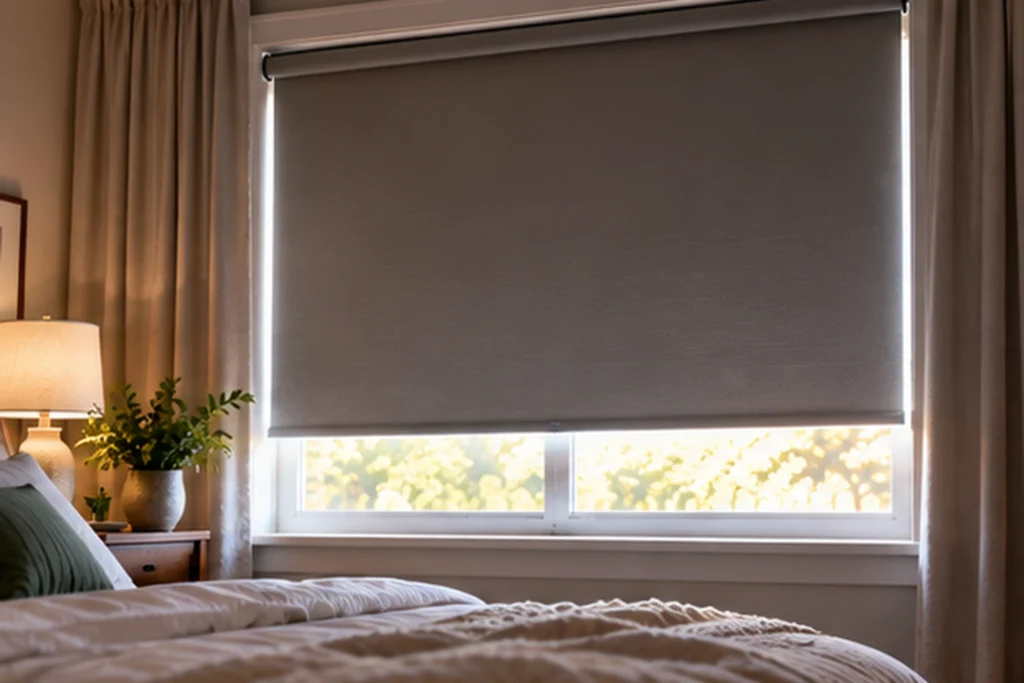
Dark bedroom with an opaque window shade and curtains set up for daytime sleep
1. Test the Room in Full Daylight
Do not judge a daytime-sleep setup at night. Close the room as you normally would after a shift, turn off indoor lights, lie on the bed, and let your eyes adjust. Daylight will reveal gaps that barely exist after sunset.
- Look above, below, and beside the window treatment.
- Check the center seam if you use two curtain panels.
- Look for light under and around the bedroom door.
- Notice light from an adjoining bathroom or hallway.
- Check clocks, chargers, routers, televisions, phones, and other LEDs.
- Notice whether direct sunlight reaches your face even if the room is otherwise dim.
Rank the sources by brightness. Fixing the largest daylight leak first usually gives a bigger improvement than covering several tiny LEDs.
2. Use an Opaque Window Layer Close to the Glass
Standard blinds often provide privacy without creating enough darkness for daytime sleep. CDC/NIOSH specifically notes that blinds can allow too much light to filter into a bedroom and recommends more opaque window coverings for people who work night or evening shifts.
A room-darkening or blackout roller shade, cellular blackout shade, removable opaque panel, or another properly fitted opaque layer can reduce the amount of daylight entering through the glass. The exact product matters less than whether the material is truly opaque and covers the opening well.
2.1 Outside mount vs. inside mount
An inside-mounted shade can look clean, but the small clearance required for the mechanism may leave bright vertical gaps. An outside-mounted treatment can extend beyond the frame and may provide more forgiving coverage. If you already have an inside-mounted blind, adding a wider second layer can address the perimeter instead of replacing the blind.
3. Seal the Edges—Daylight Finds Small Gaps
With daytime sleep, the edges can matter almost as much as the center of the window. A narrow strip of direct sun can remain surprisingly bright in an otherwise dark room.
Extend curtains or shades beyond the window frame where possible. Use wider panels, greater overlap at the center, a wraparound rod, side channels, or a second opaque layer when the first treatment leaves visible gaps. CDC/NIOSH guidance explicitly recommends making adjustments to block light entering around the edges.
Detailed guide: How to Block Light Around the Edges of Blackout Curtains
4. Layer Window Treatments for Strong Daylight
If one treatment is not enough, layering often works better than searching for a single perfect product. An opaque shade close to the window can block most direct light, while wider curtains can cover side and top leakage.
Layering is particularly useful for east-facing bedrooms with strong morning sun, west-facing rooms used for afternoon sleep, and windows facing reflective buildings or bright outdoor surfaces.
If you do not want blackout curtains, temporary blackout panels, removable shades, or an opaque blind can still form the primary layer.
Alternative options: Best Ways to Block Bedroom Light Without Blackout Curtains
5. Stop Light Coming Under the Bedroom Door
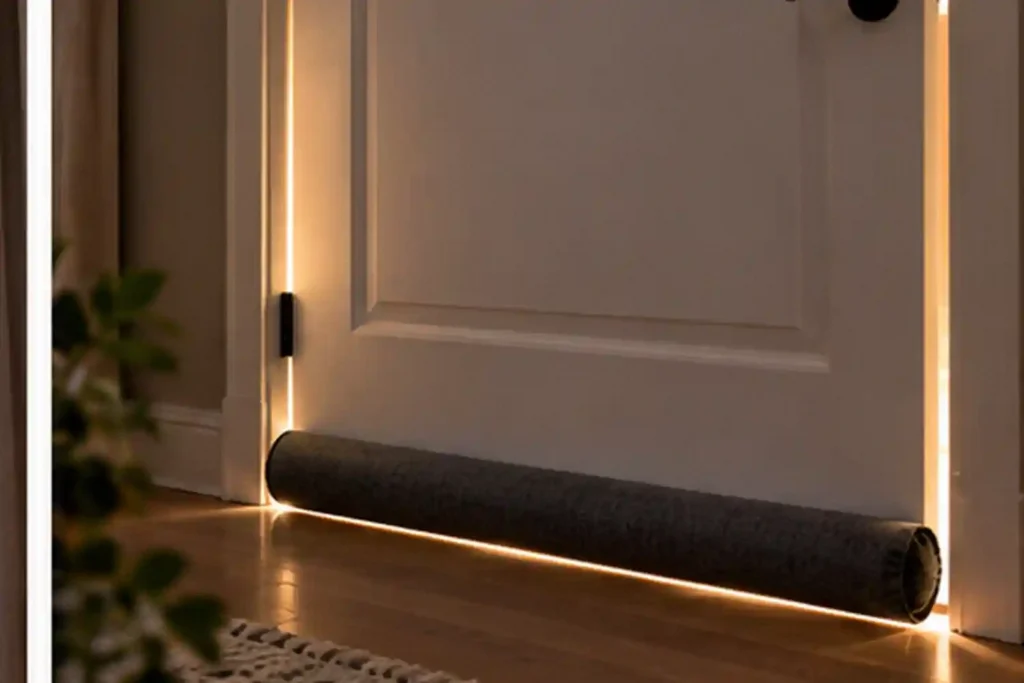
A dark window does not help much if a bright hallway creates a glowing strip beneath the door. CDC/NIOSH recommends preventing light from entering under doorways, including by turning off hall lights or using a draft stopper.
Start by reducing the hallway light if other household members can do so safely. If the hall needs to remain lit, a removable door draft stopper or similar light-blocking barrier can reduce the gap.
Keep the bedroom exit usable. Do not create a barrier that makes it difficult to open the door quickly or becomes a tripping hazard.
6. Remove Daylight From the Bathroom Route
Daytime sleepers sometimes darken the bedroom carefully and then walk into a brightly lit bathroom during a brief awakening. CDC/NIOSH recommends keeping the path between the bedroom and bathroom dark and clear of obstacles, with a dim red nightlight as an option when some visibility is needed.
You do not need to navigate a dangerous pitch-black route. The better approach is to keep the path clear and use the minimum practical light needed for safe movement.
7. Cover or Reposition Glowing Electronics
Once daylight is controlled, smaller indoor lights become more noticeable. White or blue clock displays, chargers, televisions, phones, and other electronics can add unnecessary light to a room that you worked hard to darken.
Turn off what you do not need. Rotate displays away from the bed, move devices, dim compatible screens, or cover nonessential indicators only when doing so does not obstruct ventilation or safety warnings. Silence phone notifications so the screen does not repeatedly wake.
NHLBI notes that light is an important signal to the sleep-wake system, and its healthy-sleep guidance recommends a dark bedroom and avoiding bright artificial light near sleep time.
8. Use an Eye Mask as a Backup, Not a Failure
An eye mask is useful when you rent, travel, share a room, cannot alter the window, or still have small leaks after reasonable room-darkening changes. CDC/NIOSH specifically recommends an eye mask when environmental light cannot be fully avoided.
Choose comfort over complexity. A mask that presses on your eyes, becomes hot, or falls off will not be useful just because it has an elaborate design. Adjust the strap so it stays in place without excessive pressure.
For strong daylight, an eye mask can complement room darkening rather than replace it. Reducing the room light still helps when you wake briefly or when the mask shifts.
9. Think About Light Before You Get Home From a Night Shift
For permanent night-shift workers, the bedroom is only one part of light management. CDC/NIOSH notes that bright light can affect circadian alerting and discusses reducing light exposure after a night shift. However, it also warns that dark sunglasses can reduce alerting effects and may increase risk if you are already sleepy while driving.
Driving safety takes priority over trying to preserve darkness. If you are very sleepy, do not use a light-reduction strategy that makes the drive less safe. Individual light-timing strategies can also be complex; a sleep specialist can provide guidance when circadian adjustment is a persistent problem.
10. Keep the Room Dark Without Making It Unsafe
A room optimized for daytime sleep can become extremely dark. Keep the path to the door and bathroom free from cords, bags, shoes, furniture corners, and other obstacles.
If you need a small orientation light, CDC/NIOSH suggests a dim red nightlight. The objective is enough visibility to move safely without flooding the room with bright light.
11. Renter-Friendly Daytime Blackout Options
You can create meaningful darkness without permanently altering the room. The best renter solution depends on the window and lease restrictions.
- Tension-mounted opaque shades where the window recess allows them.
- Removable blackout panels fitted to the glass or frame according to product instructions.
- A portable blackout shade designed for temporary installation.
- Existing blinds plus a removable opaque second layer.
- An eye mask for the final small amount of light that cannot be controlled.
- A removable draft stopper for light under the door.
Avoid improvised materials that may trap excessive heat against glass, create moisture problems, damage paint, interfere with ventilation, or block emergency egress. Follow product and window-manufacturer instructions.
12. A Daytime Sleep Darkness Checklist
- Inspect the bedroom in full daylight at your normal sleep time.
- Block the glass with an opaque window treatment.
- Seal the brightest top and side gaps.
- Overlap the center if you use two curtain panels.
- Block light beneath the bedroom door.
- Darken the bathroom route without creating a fall hazard.
- Turn off or reposition bright electronics.
- Silence phone alerts and screen wakeups.
- Keep an eye mask nearby as a backup.
- Test the setup for several sleep periods before buying more products.
13. What If the Room Is Dark but You Still Cannot Sleep?
Darkness removes an important environmental barrier, but it cannot guarantee daytime sleep. Noise, room temperature, household interruptions, caffeine timing, rotating schedules, and circadian misalignment can also matter.
NHLBI advises shift workers who remain unable to fall asleep during the day or adapt to their work schedule to talk with a healthcare professional about other options. Persistent daytime-sleep problems should not automatically trigger another round of window-product purchases.
Broader bedroom guide: How to Create a Sleep-Friendly Bedroom: A Practical Guide
14. Frequently Asked Questions
14.1 How dark should a bedroom be for daytime sleep?
CDC/NIOSH recommends a very dark sleep environment for shift workers. Rather than chasing a consumer light-meter target, focus on eliminating obvious daylight from the window, door, and electronics while keeping the room safe to navigate.
14.2 Are blackout curtains enough for daytime sleep?
They can be if the fabric is opaque and the installation controls the edges. Strong daylight often exposes top, side, center, or bottom gaps, so a shade-plus-curtain combination may work better in difficult rooms.
14.3 How can I darken a room without blackout curtains?
Use an opaque roller or cellular shade, temporary blackout panel, removable portable shade, or other properly fitted light-blocking layer. An eye mask can handle remaining light when permanent changes are not possible.
14.4 What is best for a night-shift worker: blackout curtains or blinds?
Neither category is automatically best. Choose the system that produces the darkest result at your window. Opaque blinds or shades can work well, but inside-mounted treatments may need side coverage; curtains can extend beyond the frame. Layering is often useful.
14.5 Should I wear sunglasses on the way home after night shift?
Light management after a night shift is more complicated than simply wearing dark glasses. CDC/NIOSH warns that reducing the alerting effect of light can be unsafe if you are already sleepy while driving. Driving safety comes first; seek individualized guidance for circadian light strategies.
14.6 Is an eye mask enough for daytime sleep?
For some people, yes, especially when room changes are impossible. But a darkened room is more reliable when the mask moves or you wake briefly. The best mask is one that remains comfortable and stays in place for the intended sleep period.
15. Final Takeaway
For daytime sleep, start with the brightest source: daylight through the window. Use an opaque layer, control the edges, block door light, remove bright electronics, and keep an eye mask as a practical backup.
Night-shift workers do not need a stylish ‘sleep cave’ filled with gadgets. They need a room that reliably becomes dark during their actual sleep hours, remains safe to move through, and reduces interruptions enough to protect the time available for sleep.
Sources
CDC/NIOSH — Create a Good Sleep Environment
CDC/NIOSH — Coping With the Night Shift: Sleep
CDC/NIOSH — Improve Sleep by Avoiding Light