Practical solutions for renters, daytime sleepers, and anyone who wants a darker room without hanging heavy drapes.
You can block bedroom light without blackout curtains by using an opaque roller shade, removable blackout window panel, fitted cellular shade, or comfortable eye mask. Smaller fixes-such as stopping light under the door and dimming electronic displays-can make a noticeable difference, too. The right choice depends on whether light is entering through the window, the doorway, or devices inside the room.
Start by identifying the brightest source from your pillow. If your existing blinds already block most daylight but leave a narrow strip along the frame, replacing the entire window treatment may be unnecessary. Conversely, if the whole window glows, covering only the edges will not solve the problem.
CDC/NIOSH recommends a very dark sleep environment and identifies room-darkening shades, blocking light around window coverings, doorway light control, and eye masks as practical options. Those recommendations are especially relevant for people sleeping during daylight hours.
1. Find the Light Leak Before Choosing a Fix
Turn off the room lights at the time you actually sleep. Wait briefly for your eyes to adjust, then look toward the window, door, clock, and charging devices. Check from the bed rather than from the doorway: a narrow beam that falls across your pillow may matter more than a larger glow elsewhere.
The entire window is bright: consider an opaque shade or temporary window panel.
Light comes through the sides of existing blinds: look at outside-mount coverage, side channels, or an overlapping second layer.
- The hallway is bright: dim the hallway or use a suitable door draft stopper.
- Small LEDs are visible: turn off, dim, reposition, or safely cover the indicators.
- You cannot change the room: a well-fitting sleep mask may be the simplest option.
Test one change before buying several products. If covering a particular gap makes the room appreciably darker, you have found a useful target.
2. Install an Opaque Roller Shade
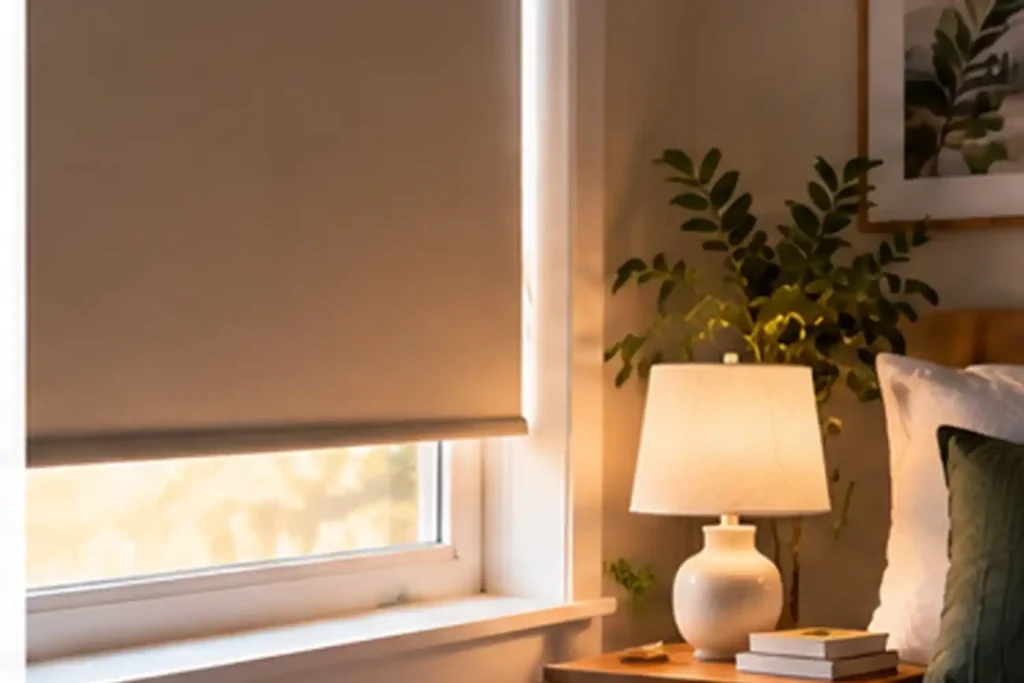
A roller shade is one of the cleanest alternatives to blackout curtains. It occupies little room, rolls up when you want daylight, and can work well behind furniture that would interfere with long fabric panels. Choose a shade described as opaque or blackout rather than assuming every roller shade blocks daylight.
The main limitation is fit. An inside-mounted shade may leave narrow strips of light at both sides because the fabric is slightly narrower than the window opening. An outside-mounted shade can extend past the frame, while some fitted systems use side channels to address perimeter leakage. Measure the complete opening and check the manufacturer’s mounting requirements before ordering.
A shade can be a good choice for a small bedroom or a home where you prefer a minimal look. If the window is unusually shaped, however, a temporary panel may be easier to fit.
3. Try Removable Blackout Window Panels
Temporary opaque panels can be useful for renters, travelers, and people who sleep during the day. A panel can be cut or selected to cover the window opening and removed when you want daylight. The important details are coverage, secure attachment, and the condition of the window and wall surface.
Choose a purpose-made removable solution where possible. Check whether adhesive strips are safe for your paint or trim, whether the panel can be removed without damage, and whether the window needs to remain accessible for ventilation or emergency exit. Avoid taping improvised materials directly to glass without understanding the manufacturer’s heat and breakage warnings.
For a window you open every morning, convenience matters. A perfectly opaque panel that is awkward to remove may be less useful in daily life than a slightly more expensive shade you can operate easily.
4. Use a Blackout Cellular Shade or a Fitted Blind
Cellular shades offer another compact alternative. Some models are made with opaque materials, and their structured design may suit windows where curtains would feel bulky. Standard slatted blinds, by contrast, often leak light between slats and around their edges, even when fully closed.
Compare actual construction, not just the word blackout. Ask whether the shade material itself is opaque, whether side gaps remain after installation, and whether a channel or outside mount is available. If the existing blind is already close to adequate, a removable supplementary panel or eye mask may cost less than replacing it.
5. Block the Light Under the Bedroom Door
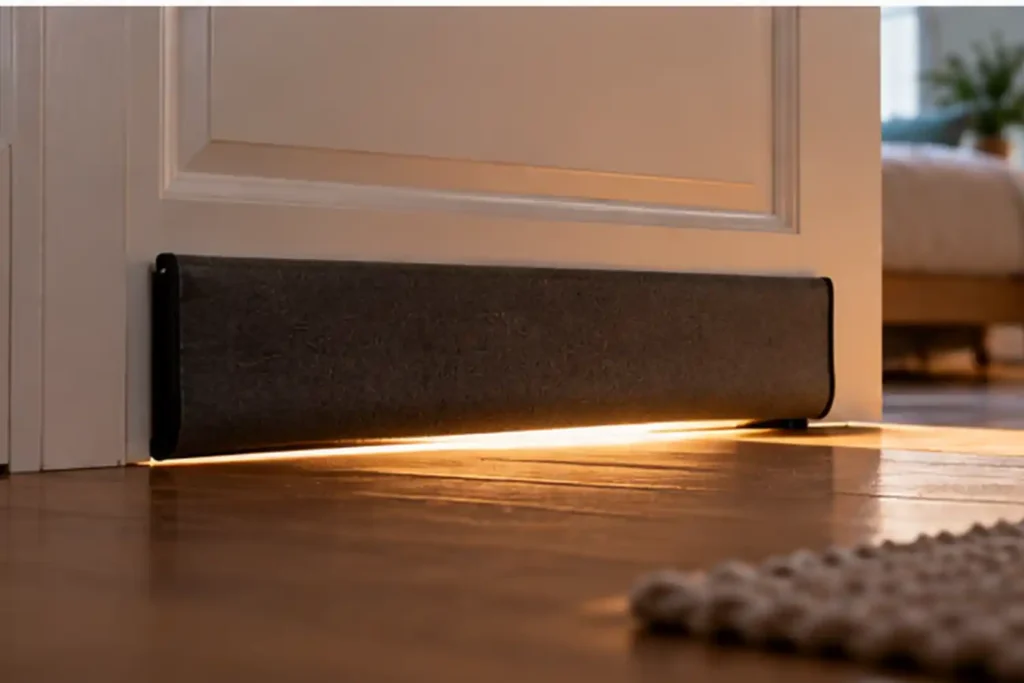
A bright hall can create a surprisingly visible stripe under the door. Turn off or dim the hall light when practical. If it needs to stay on, a suitable draft stopper or door sweep can reduce light spilling into the bedroom. Check that the door still opens normally and that the product does not interfere with ventilation or other building requirements.
If you share a home, coordinate with the people who use the hallway at night. A dim, directed light outside the room may be more workable than asking everyone to navigate in darkness.
6. Make Electronic Lights Less Noticeable
Phone screens, alarm clocks, charging lights, routers, and televisions can remain visible after the window is dark. Turn off nonessential devices, use a clock dimming feature, rotate a charger away from the bed, and set the phone to Do Not Disturb. CDC/NIOSH specifically recommends blocking or removing sources of white or blue light in the sleeping area.
Do not cover ventilation openings, status lights needed for safety, or equipment in ways the manufacturer prohibits. Often simply moving the device out of direct sight is enough.
7. Wear a Comfortable Eye Mask
A sleep mask is the most portable option and does not require any installation. It can be useful for hotels, shared bedrooms, naps, and rented homes where window modifications are restricted. A contoured design may suit someone who dislikes pressure around the eyes, while a softer flat mask may be more comfortable for someone who sleeps on their side. Fit matters more than a claim on the packaging.
The mask needs to stay in place for the period you want to sleep. If it slips off or lets light through around the nose, adjust the fit or try a different shape. An eye mask is a practical backup, not proof that a bright room has been fixed.
8. Rearrange the Bed or Shield a Direct Beam
When one streetlight or early-morning beam lands directly on your pillow, moving the bed slightly may help. A headboard or furniture arrangement can sometimes keep a direct beam out of your eyes without requiring a new window treatment. This is most useful when the rest of the room is already reasonably dark.
Do not block the bedroom exit, a window used for emergency escape, heating equipment, or a clear route to the bathroom. If the light illuminates the whole room, furniture placement is unlikely to replace a proper window covering.
9. Combine Small Fixes for Daytime Sleep
Daytime sleepers often need more than one measure because daylight exposes gaps that are barely visible at night. Start with an opaque shade or removable panel, then check the edges, doorway, and any bright electronics. Keep an eye mask available for residual light or travel.
The CDC’s shift-work guidance recommends a dark sleeping area and addresses both window and doorway light. That does not mean every bedroom needs permanent blackout construction; it means the setup should match the brightness present during your actual sleep hours.
10. Which Option Fits Your Situation?
| Situation | Try first | Main trade-off |
| Rented bedroom | Removable blackout panel or no-drill shade | Check surface damage and safe mounting |
| Small bedroom | Opaque roller or cellular shade | Perimeter light gaps |
| Daytime sleep | Opaque shade plus gap control | May require more than one layer |
| Travel or shared room | Comfortable eye mask | Must fit and stay on |
| Hallway light | Dim hallway or draft stopper | Preserve safe movement |
| Bright device LEDs | Dim, switch off, or reposition | Do not obstruct safety features |
11. Mistakes That Keep the Room Bright
A common mistake is choosing a light-filtering product when the problem calls for opaque coverage. Another is measuring only the glass rather than considering the surrounding frame and edge gaps. People also sometimes spend money on a new window treatment while leaving a bright hallway light or phone screen unchanged.
Avoid covering windows in ways that trap excessive heat or damage glass, using unstable materials above the bed, or obstructing exits and ventilation. Keep a clear path for nighttime bathroom trips; CDC/NIOSH notes that a dim red nightlight can be used when orientation light is needed.
12. A Ten-Minute Light-Control Checklist
- Lie on the bed and identify the brightest light source.
- Check whether light passes through the covering or around it.
- Try an opaque shade or removable panel for a bright window.
- Reduce light under the bedroom door.
- Dim or reposition electronic indicators.
- Try an eye mask if you cannot modify the room.
- Keep the exit and nighttime walking path clear.
- Test the change under the lighting conditions that usually disturb you.
Frequently Asked Questions
Can you make a bedroom dark without blackout curtains?
Yes. Opaque roller or cellular shades, removable blackout panels, and eye masks are alternatives. Door gaps and electronic lights may also need attention.
What is the cheapest way to block light from a bedroom window?
First check whether adjusting an existing covering solves the problem. A temporary opaque panel or eye mask may be economical, but cost and suitability depend on window size, attachment method, and how often you need to open it.
Do regular blinds block enough light for sleep?
Sometimes, particularly when outside light is weak. Slatted blinds often allow light between slats or at the sides, so they may be insufficient for bright daylight or a street-facing bedroom.
Can renters use blackout window film?
Some removable films are marketed for temporary use, but check the manufacturer’s instructions, glass compatibility, heat warnings, and lease conditions. A removable panel or no-drill shade may be easier to reverse.
Is a sleep mask as useful as darkening the room?
A comfortable mask can reduce light reaching the eyes and may be enough for some people. It must fit and stay in place, and it will not make the rest of the room dark.
Should I keep the bedroom completely dark if I get up at night?
Reduce unwanted light while keeping a safe path. A low-level nightlight can help you navigate; avoid trip hazards and do not obstruct emergency exits.
Final Takeaway
You do not need blackout curtains to create a darker bedroom. An opaque shade, removable window panel, fitted blind, or eye mask may solve the problem. The most cost-effective first step is to identify the source of light and choose a solution that fits your window and living situation.
If light is already under control but sleep remains difficult, look at noise, temperature, comfort, and routine rather than continuing to buy light-blocking products. Persistent sleep difficulties deserve individualized medical guidance.
Related reading: How to Make Your Bedroom Darker for Better Sleep
Related reading: Blackout Curtains vs. Blackout Blinds: Which Is Better for Sleep?
Related reading: How to Create a Sleep-Friendly Bedroom: A Practical Guide
Sources
CDC/NIOSH – Create a Good Sleep Environment – https://www.cdc.gov/niosh/work-hour-training-for-nurses/longhours/mod6/02.html
CDC/NIOSH – Improve Sleep: Tips to Improve Your Sleep When Times Are Tough – https://www.cdc.gov/niosh/bulletin/2020/sleep.html
CDC/NIOSH – Aircrew and Jet Lag – https://www.cdc.gov/niosh/aviation/prevention/aircrew-jetlag.html